Autonomous driving research at Toyota Research Institute
A nearly two-year research program on autonomous driving experiences, from passenger trust in full autonomy to driver engagement in partial autonomy, that contributed to over $1M in project cost reduction and a 200%+ usability improvement.
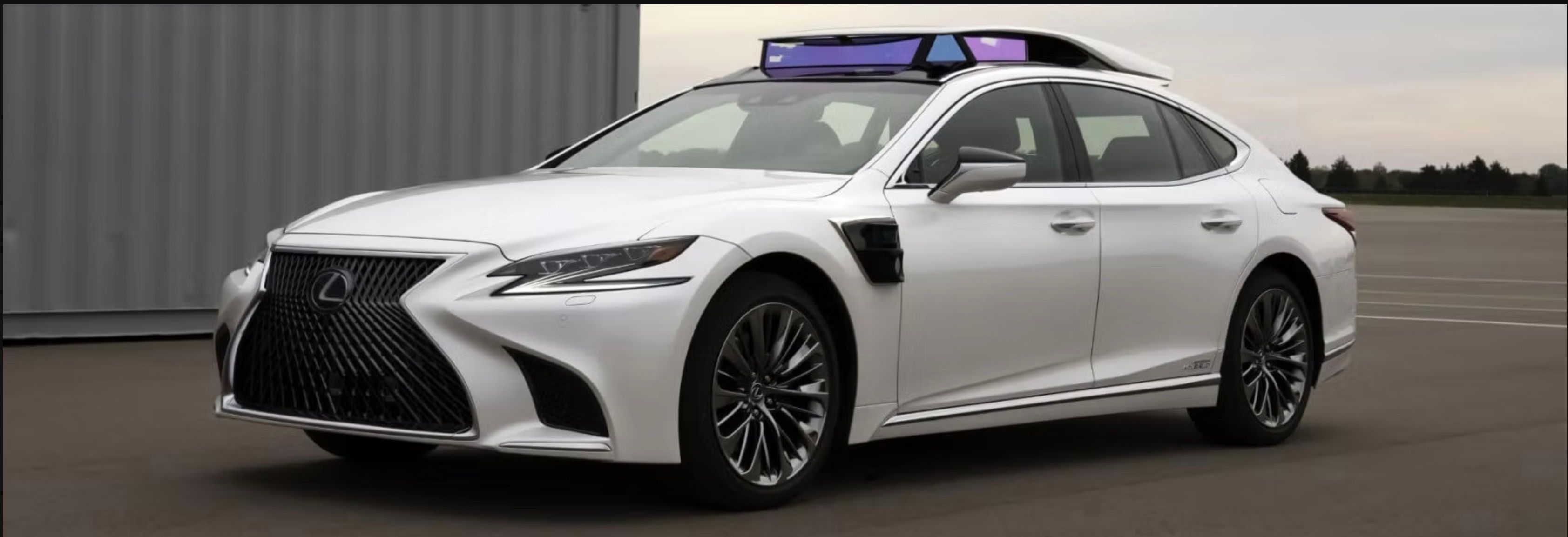
Summary
From 2019 to 2021 I led UX research for autonomous driving at Toyota Research Institute (TRI), Toyota’s advanced R&D organization in Los Altos, California. The work spanned passenger experience in full autonomy, driver experience in partial autonomy, and contextual study of expert human driving, across TRI’s Chauffeur, Guardian, and Driving Sensei programs. It contributed to over $1M in project cost reduction and a 200%+ usability improvement.
What R&D research is actually like
Doing UX research on products that may never ship is a different discipline than doing it on products that will. You’re not optimizing a thing that exists; you’re trying to understand what should exist, without the safety net of shipping it to see what happens. The cost of building the wrong autonomous system isn’t a bad app update; it is measured in capital expenditure and sometimes in physical safety. Studies had to produce evidence strong enough to inform multi-million-dollar engineering investments, and translate cleanly between research findings and engineering specifications.
Trust and mode awareness
The hardest research problem in fully autonomous vehicles isn’t whether passengers will use them. It’s whether they will trust them, what happens when something feels wrong, and how trust is built or broken over time and across edge cases. On TRI’s Chauffeur program, Toyota’s work toward SAE Level 4–5 autonomy, I designed and led studies probing what passengers expect the system to communicate before, during, and after a trip; what makes them comfortable giving up control; how they want to intervene when the system does something they wouldn’t have; and what role information visualization plays in calibrating trust to the system’s actual capabilities. The findings centered on transparency, mode awareness, and the role of mundane interaction details (door behaviors, climate transitions, audio cues) in shaping a passenger’s sense of control.
Attention and recovery
When the driver stays in control and the system intervenes only when needed, the research problem gets subtler. How does a driver maintain engaged attention across long stretches of nominally normal driving while a system silently monitors and stands by? How does the system communicate that it has acted without undermining the driver’s confidence in their own ability? On TRI’s Guardian program, Toyota’s automated safety system, I studied how drivers form mental models of the system’s capabilities, which interventions create the most friction or risk, and what failure modes lead to dangerous handoffs, combining Driver-in-the-Loop simulation with on-road observation.
Recovery instincts came into sharper focus on Driving Sensei, TRI’s program for an autonomous system that learns advanced driving skill from expert human drivers. I ran contextual inquiries with driving trainers and students through advanced maneuvers such as high-speed emergency lane changes and controlled drifting, where judgment, attention, and recovery are the salient signal. The findings, a written report, and a documentary film I produced from those field sessions shaped the program’s advanced-driving training module.
Methods
The program used the full range of UX research methods: semi-structured interviews, contextual inquiry, controlled usability studies, simulator-based studies, on-road observation, heuristic evaluations, human-factors studies, mixed-methods surveys, journey mapping, and synthesis across multiple data streams. The work also involved close partnership with human-factors researchers and engineers. Autonomous driving R&D is one of the few areas where UX research has to integrate tightly with formal human-factors science, and the rigor of that partnership informs how I approach AI research today.
Why this work prepared me for AI research
Autonomous driving research and AI product research share most of their core disciplines. Trust calibration: knowing when users will trust a system and when they won’t, and what determines that. Mode awareness: helping users understand what state the system is in and what it’s about to do. Attention management: designing for conditions where the human is in a loop but not always fully engaged. Recovery from system failure: what happens when the system can’t do what it’s supposed to do, and how to communicate that without breaking trust.
Every one of these disciplines is now central to AI product research at the consumer level. The work that’s most useful in AI today isn’t the work that was novel to AI; it’s the work that came from adjacent fields where similar problems were already being solved. Most of what I’ve done at Lucid on the AI assistant and the AI experience platform builds on disciplines that started at TRI.